Case management solution for the customer non-refundable waiver request
Case management solution for the customer non-refundable waiver request
Case management solution for the customer non-refundable waiver request
Case management solution for the customer non-refundable waiver request
Customer non-refundable waiver request
Overview
Overview
These days case management is crucial for any customer support business as it allows agents to access, track and service different customer requests efficiently and fast! This also makes self-service integration possible!
These days case management is crucial for any customer support business as it allows agents to access, track and service different customer requests efficiently and fast! This also makes self-service integration possible!
These days case management is crucial for any customer support business as it allows agents to access, track and service different customer requests efficiently and fast! This also makes self-service integration possible!
These days case management is crucial for any customer support business as it allows agents to access, track, and service different customer requests efficiently and fast! This also makes self-service integration possible!
Role and problem
Role and problem
As a sole end-to-end designer and the owner of the case management area while at the Expedia Global Operations (GCO) group, I worked on the case management solution for our travel Customer Relations Management (CRM) platform in order to support different business cases.
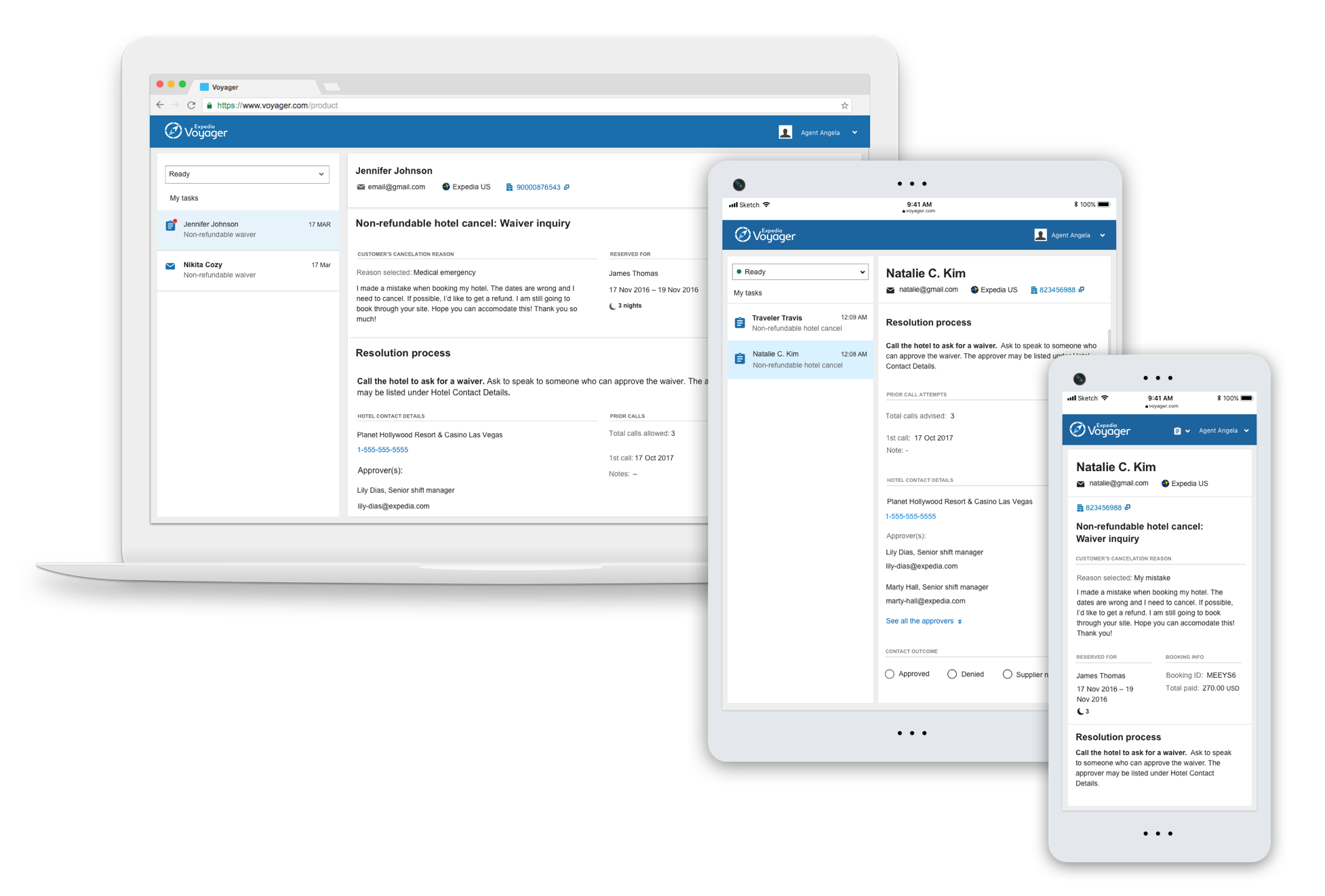
Here I present a design project for resolving a customer request for a waiver on their non-refundable booking. Below you will find the artifacts I created for this project.
As a sole end-to-end designer and the owner of the case management area while at the Expedia Global Operations (GCO) group, I worked on the case management solution for our travel Customer Relations Management (CRM) platform, in order to support different business cases.
Here I present a design project for resolving a customer request for a waiver on their non-refundable booking. Below you will find the artifacts I created for this project.
As a sole end-to-end designer and the owner of the case management area while at the Expedia Global Operations (GCO) group, I worked on the case management solution for the travel Customer Relations Management (CRM) platform in order to support different business cases.
Here I present a design project for resolving a customer request for a waiver on their non-refundable booking. Below you will find the artifacts I created for this project.
As a sole end-to-end designer and the owner of the case management area while at the Expedia Global Operations (GCO) group, I worked on the case management solution for the travel Customer Relations Management (CRM) platform in order to support different business cases.
Here I present a design project for resolving a customer request for a waiver on their non-refundable booking. Below you will find the artifacts I created for this project.
Solution for the non-refundable waiver requests
Solution for the non-refundable waiver requests
- I designed the first mocks at a very early project stage without having clear and concrete requirements to generate initial discussions and brainstorming
- I produced different design layouts as well as alternative treatment of the button controls to see which would resonate best with the user
- I tested interactive Axure prototypes with 9 agents using Rapid Iterative Testing and Evaluation (RITE) method
- I took initiative to test a design without icons as the UX team was discussing a need to reduce icon use
- I designed and tested two different ways to show instructional copy in the designs
- I designed the first mocks at a very early project stage without having clear and concrete requirements to generate initial discussions and brainstorming
- I produced different design layouts as well as alternative treatment of the button controls to see which would resonate best with the user
- I tested interactive Axure prototypes with 9 agents using Rapid Iterative Testing and Evaluation (RITE) method
- I took initiative to test a design without icons as the UX team was discussing a need to reduce icon use
- I designed and tested two different ways to show instructional copy in the designs
- I designed the first mocks at a very early project stage without having clear and concrete requirements to generate initial discussions and brainstorming
- I produced different design layouts as well as alternative treatment of the button controls to see which would resonate best with the user
- I tested interactive Axure prototypes with 9 agents using Rapid Iterative Testing and Evaluation (RITE) method
- I took initiative to test a design without icons as the UX team was discussing a need to reduce icon use
- I designed and tested two different ways to show instructional copy in the designs
Process
Process
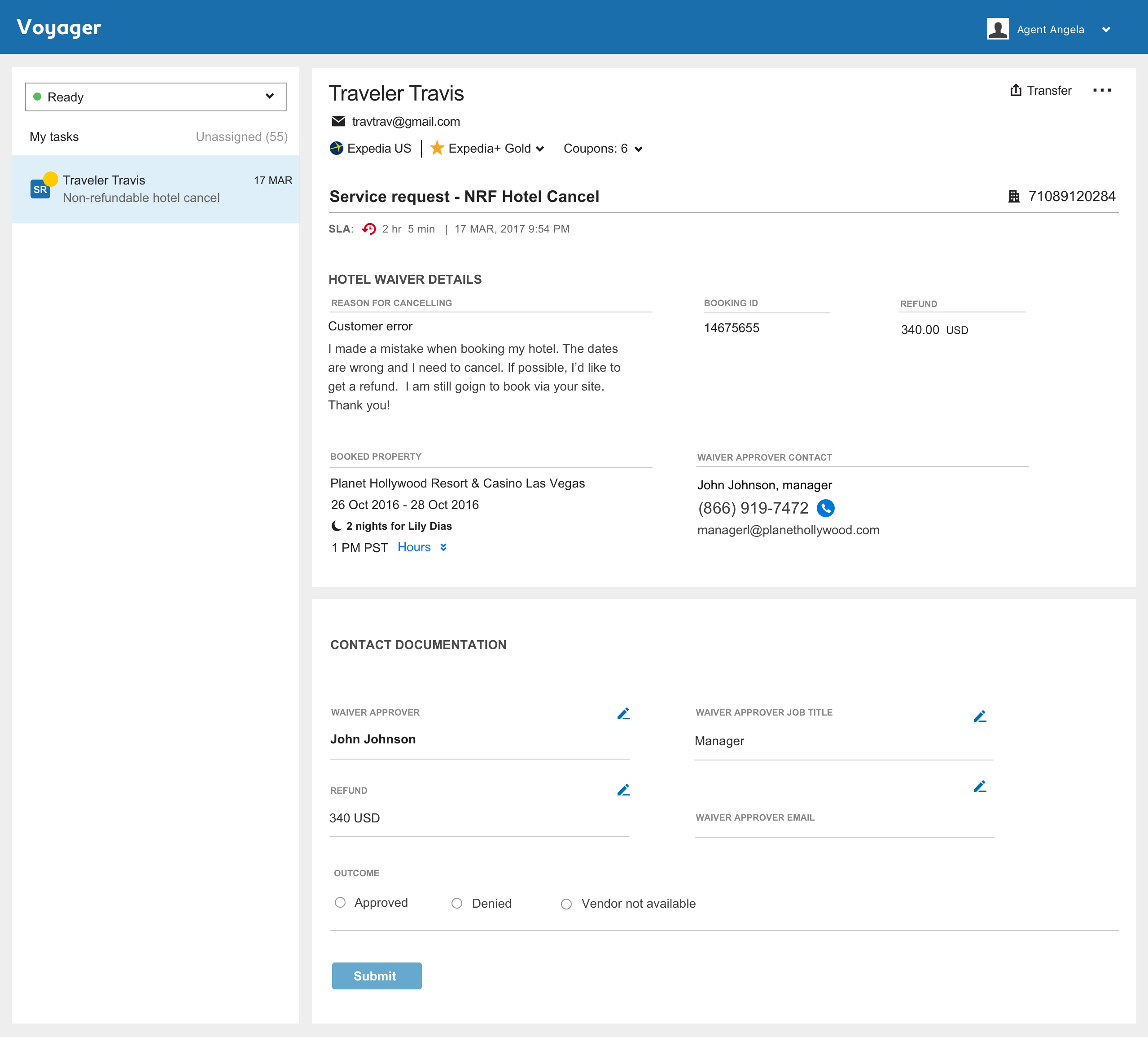
For the non-refundable waiver request project, the Product Manager (PM) (located in London) and I were in the process of gathering all the requirements and interviewing all the stakeholders, when I started sketching my first design concepts. When the PM was visiting the Bellevue office, we got together and I did some whiteboarding to introduce my design ideas. Soon after, I opened up Sketch to implement my first design. This not only helped with the stakeholder interviews and socializing the design early, it exposed areas that we needed to probe more into fast!
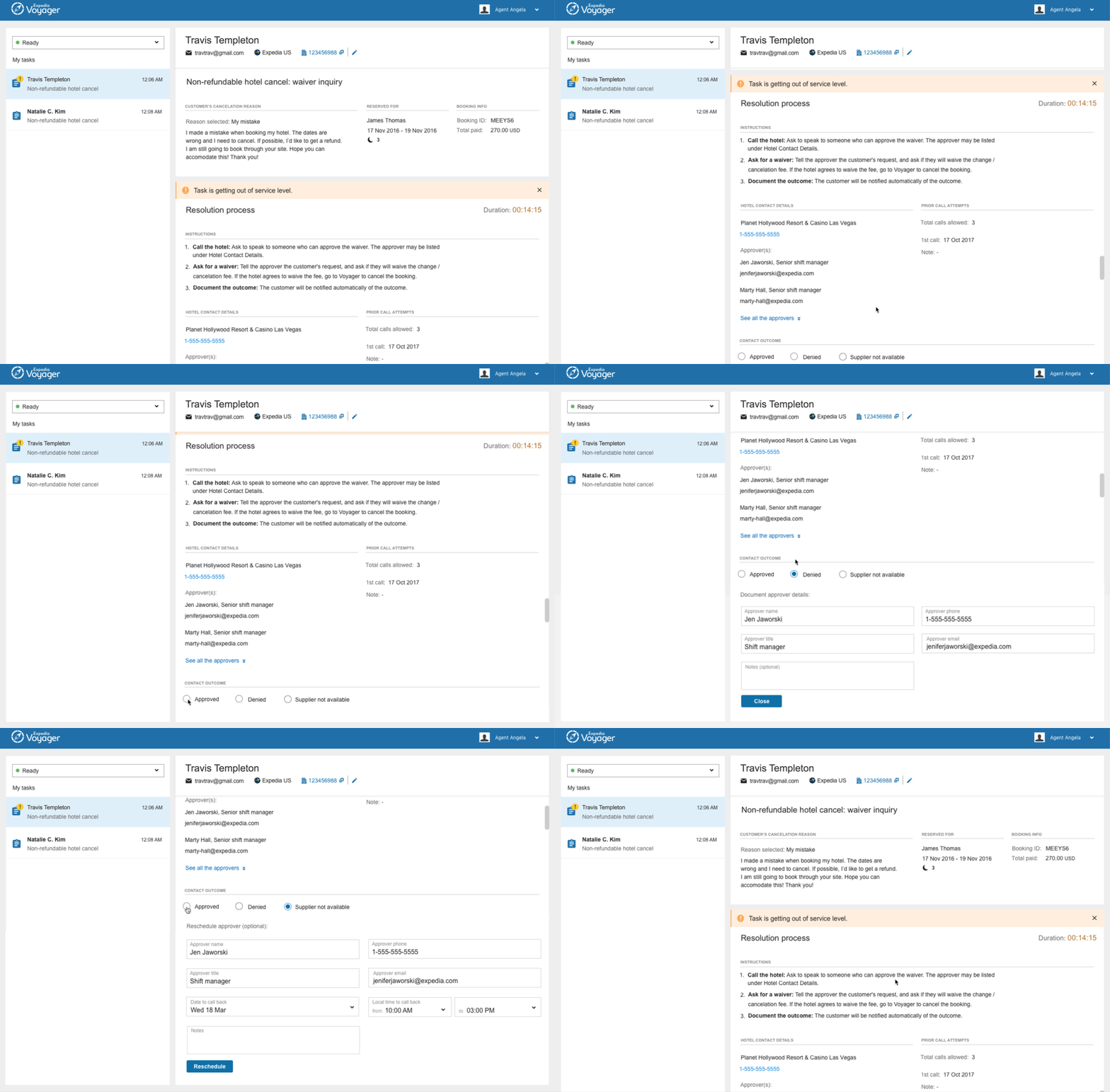
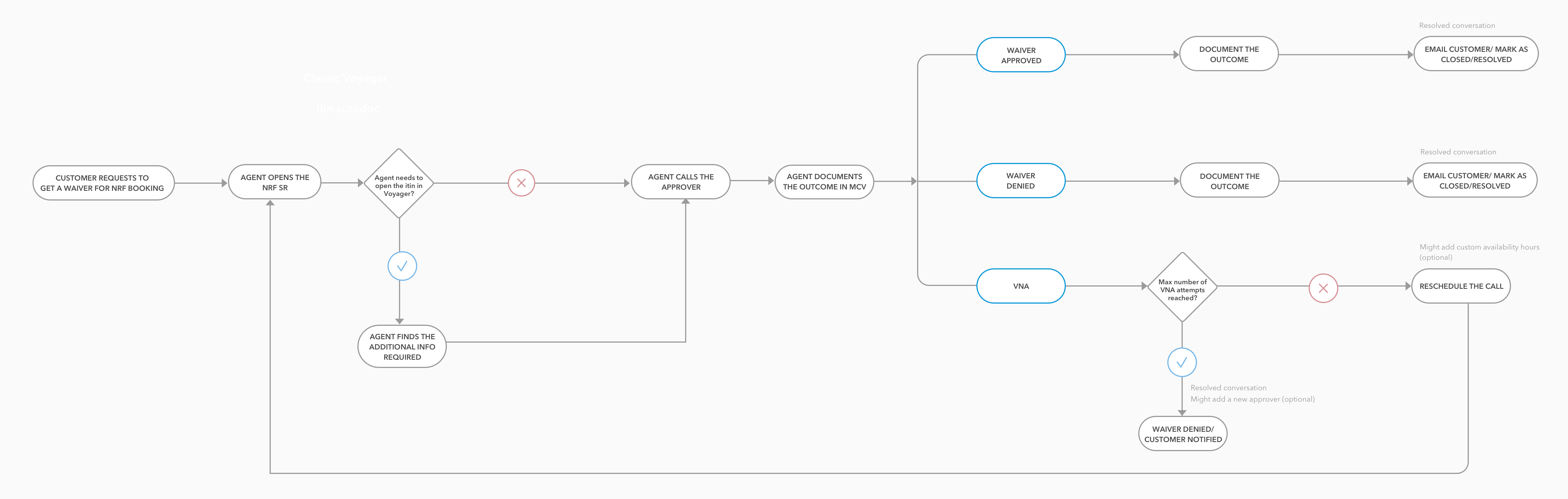
After the requirements were clear, I started mapping out user flows. In my design exploration process, I did more sketching and whiteboarding to come up with two alternative UIs to test with the users. I created interactive Axure prototypes and designed and moderated three sets of usability studies following the RITE methodology, making iterations after every set of users. I tested the two alternative designs each time in order to understand user behavior and to be able to iterate fast.
In the process, I collaborated closely with the product managers, technical product managers, engineers, writers, service delivery and line of business teams. At the end of the product design cycle, I created final visual designs and prepared red lines and wireframe annotations to guide developers during the development sprints.
For the non-refundable waiver request project, the Product Manager (PM) (located in London) and I were in the process of gathering all the requirements and interviewing all the stakeholders, when I started sketching my first design concepts. When the PM was visiting the Bellevue office, I got together and did some whiteboarding to introduce my design ideas. Soon after, I opened up Sketch to implement my first design. This not only helped with the stakeholder interviews and socializing design early, it exposed areas that we needed to probe more into fast!
After the requirements were clear, I started mapping out user flows. In my design exploration process, I did more sketching and whiteboarding to come up with two alternative UIs to test with the users. I created interactive Axure prototypes and designed and moderated three sets of usability studies following the RITE methodology, making iterations after every set of users. I tested the two alternative designs each time in order to understand user behavior and to be able to iterate fast.
In the process, I collaborated closely with the product managers, technical product managers, engineers, writers, service delivery and line of business teams. At the end of the product design cycle, I created final visual designs and prepared red lines and wireframe annotations to guide developers during the development sprints.
For the non-refundable waiver request project, the Product Manager (PM) (located in London) and I were in the process of gathering all the requirements and interviewing all the stakeholders, when I started sketching my first design concepts. When the PM was visiting the Bellevue office, I got together and did some whiteboarding to introduce my design ideas. Soon after, I opened up Sketch to implement my first design. This not only helped with the stakeholder interviews and socializing design early, it exposed areas that we needed to probe more into fast!
After the requirements were clear, I started mapping out user flows. In my design exploration process, I did more sketching and whiteboarding to come up with two alternative UIs to test with the users. I created interactive Axure prototypes and designed and moderated three sets of usability studies following the RITE methodology, making iterations after every set of users. I tested the two alternative designs each time in order to understand user behavior and to be able to iterate fast.
In the process, I collaborated closely with the product managers, technical product managers, engineers, writers, service delivery and line of business teams. At the end of the product design cycle, I created final visual designs and prepared red lines and wireframe annotations to guide developers during the development sprints.
For the non-refundable waiver request project, the Product Manager (PM) (located in London) and I were in the process of gathering all the requirements and interviewing all the stakeholders, when I started sketching my first design concepts. When the PM was visiting the Bellevue office, I got together and did some whiteboarding to introduce my design ideas. Soon after, I opened up Sketch to implement my first design. This not only helped with the stakeholder interviews and socializing design early, it exposed areas that we needed to probe more into fast!
After the requirements were clear, I started mapping out user flows. In my design exploration process, I did more sketching and whiteboarding to come up with two alternative UIs to test with the users.
I created interactive Axure prototypes and designed and moderated three sets of usability studies following the RITE methodology, making iterations after every set of users. I tested the two alternative designs each time in order to understand user behavior and to be able to iterate fast.
In the process, I collaborated closely with the product managers, technical product managers, engineers, writers, service delivery and line of business teams. At the end of the product design cycle, I created final visual designs and prepared red lines and wireframe annotations.
Early design concept
Flow diagram
Explored layout options
Explored layout options
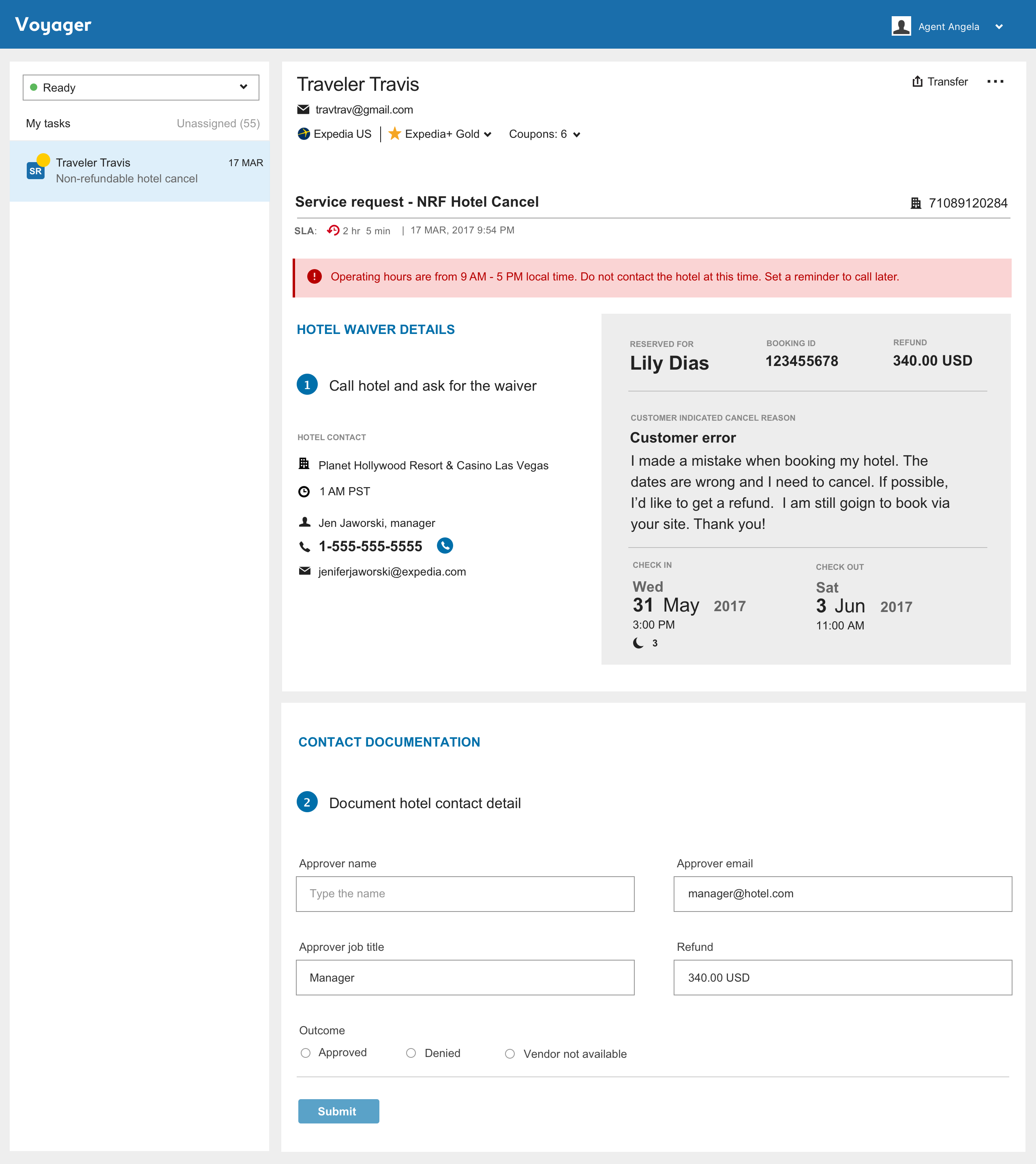
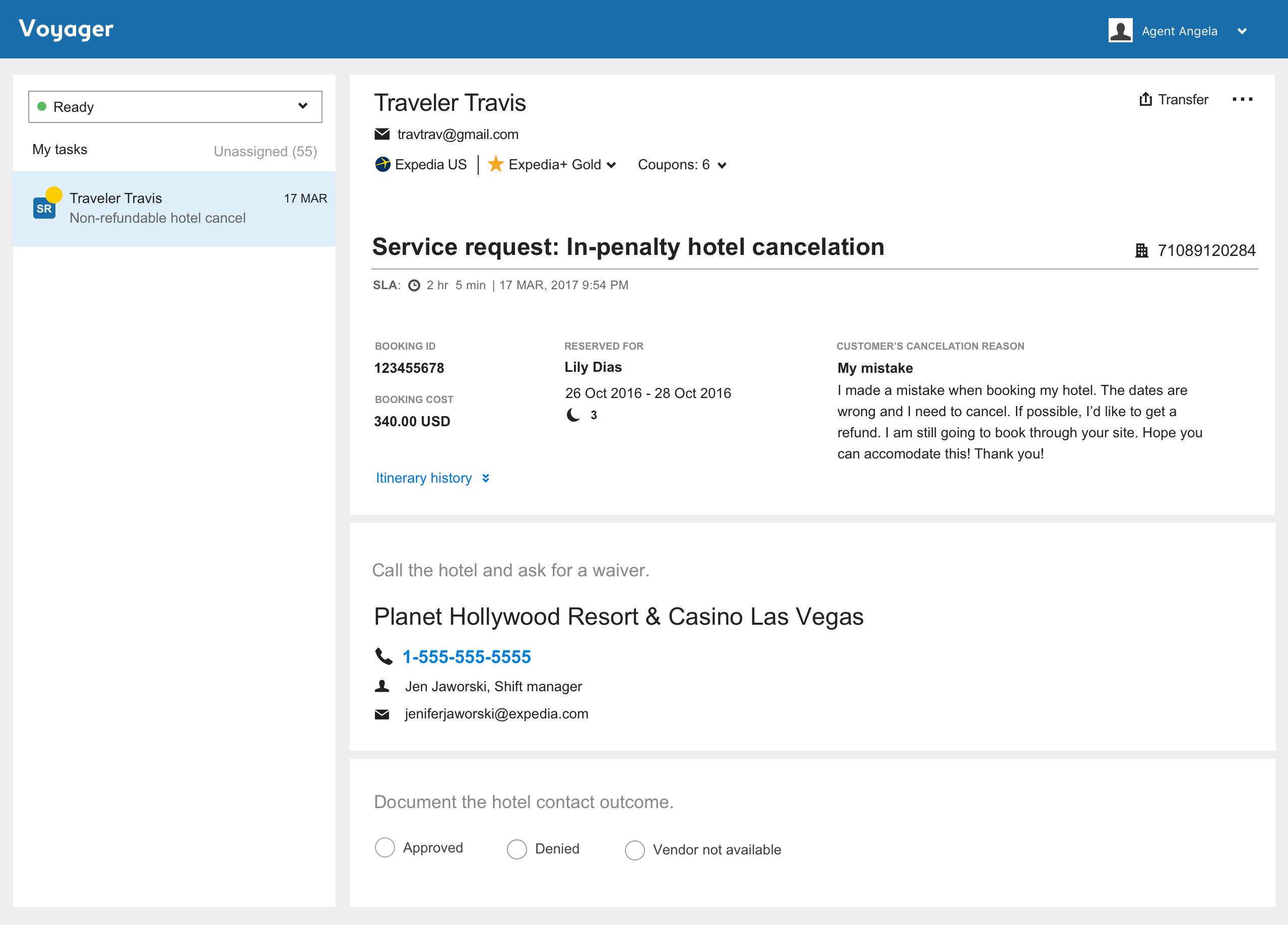
Design iteration after stakeholder review
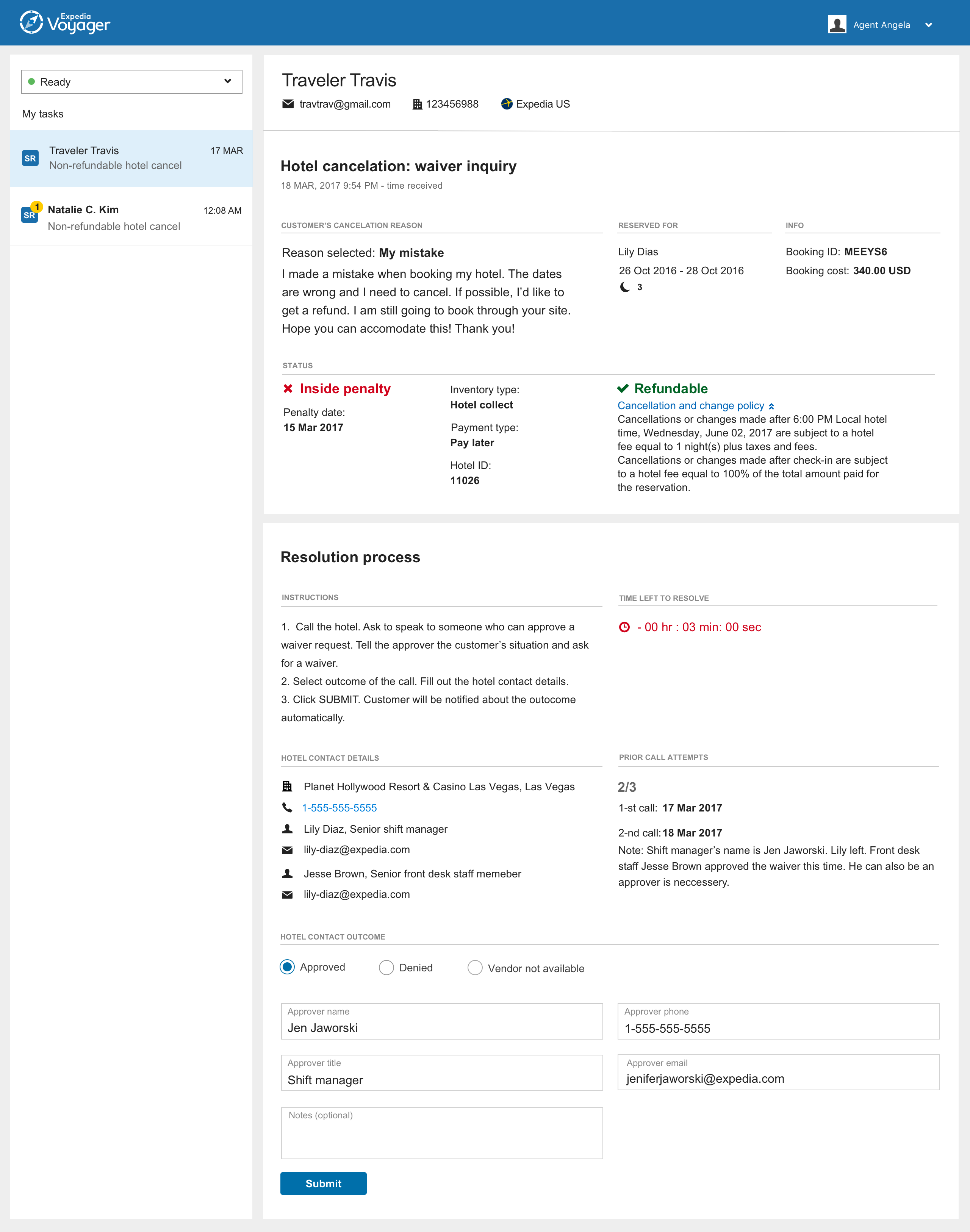
Usability study 1 - version A (note: inline instructions and use of icons)
Usability study 1 - version A (note: inline instructions and use of icons)
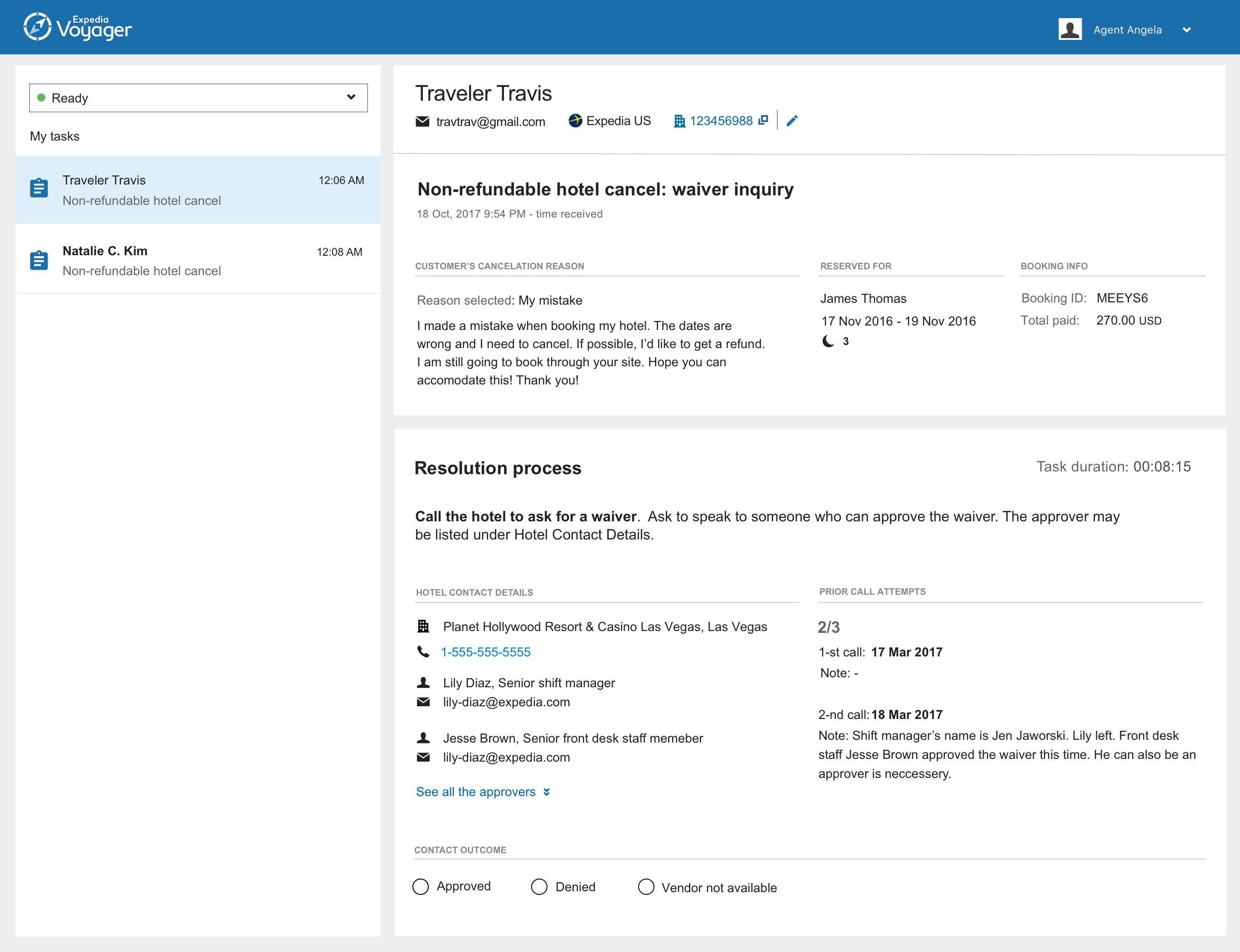
Usability study 1 - version B (note: stacked and numbered instructions and no icons)
Usability study 1 - version B (note: stacked and numbered instructions and no icons)
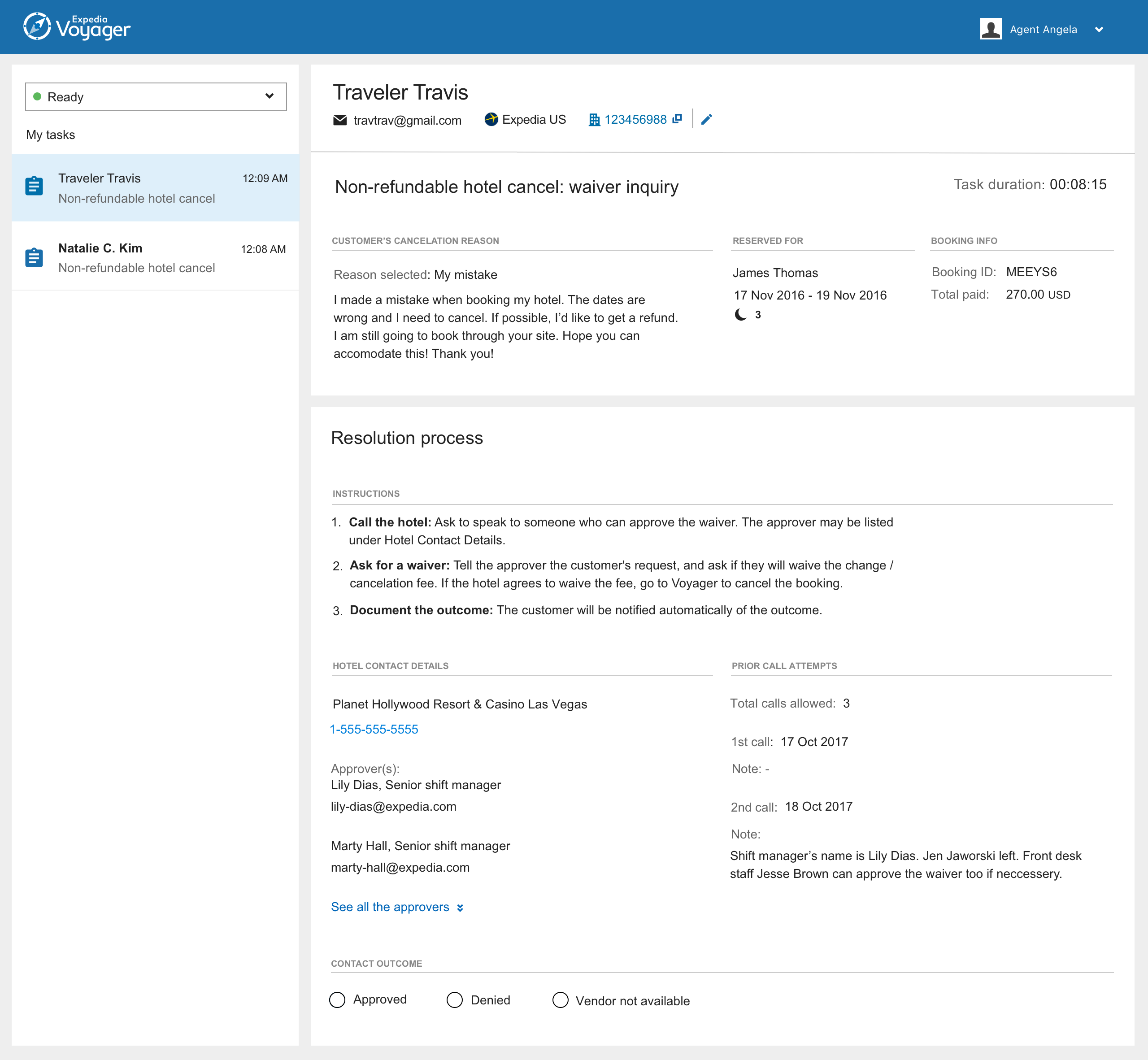
Usability study 2 - version B (note: alternative treatment of the radio button controls)
Usability study 2 - version B (note: alternative treatment of the radio button controls)
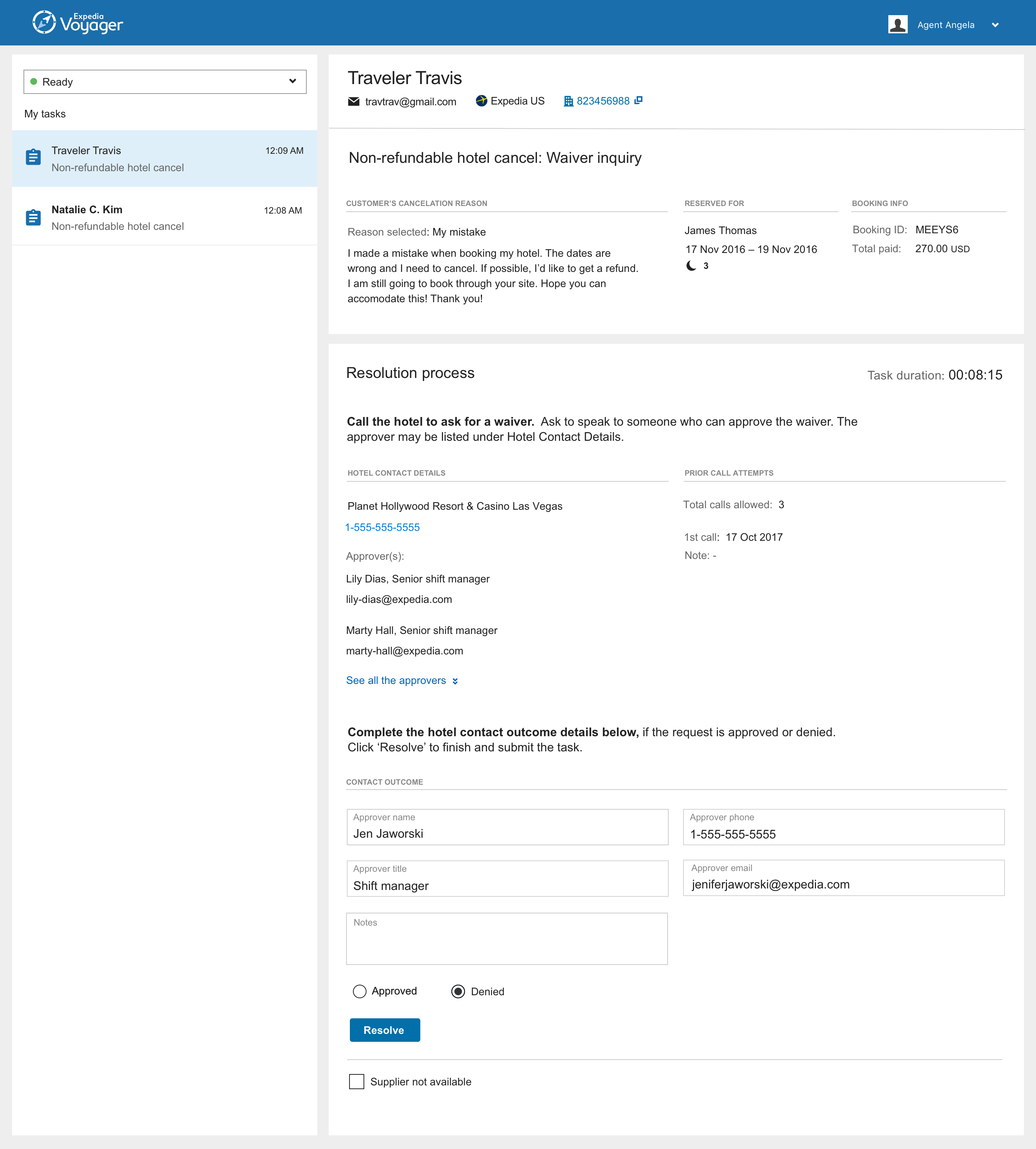
Usability study 2 - version A (note: alternative treatment of the radio button controls)
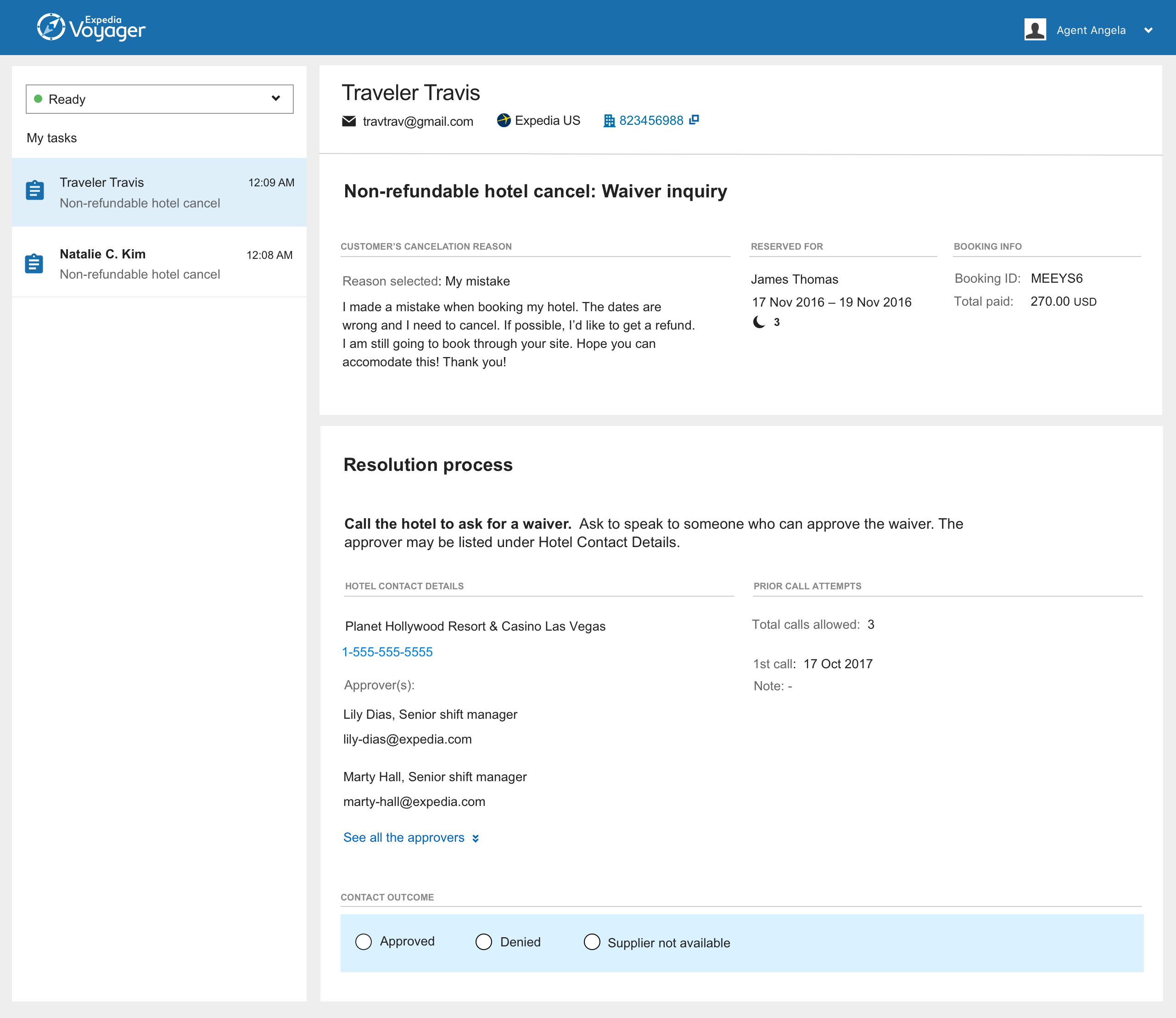
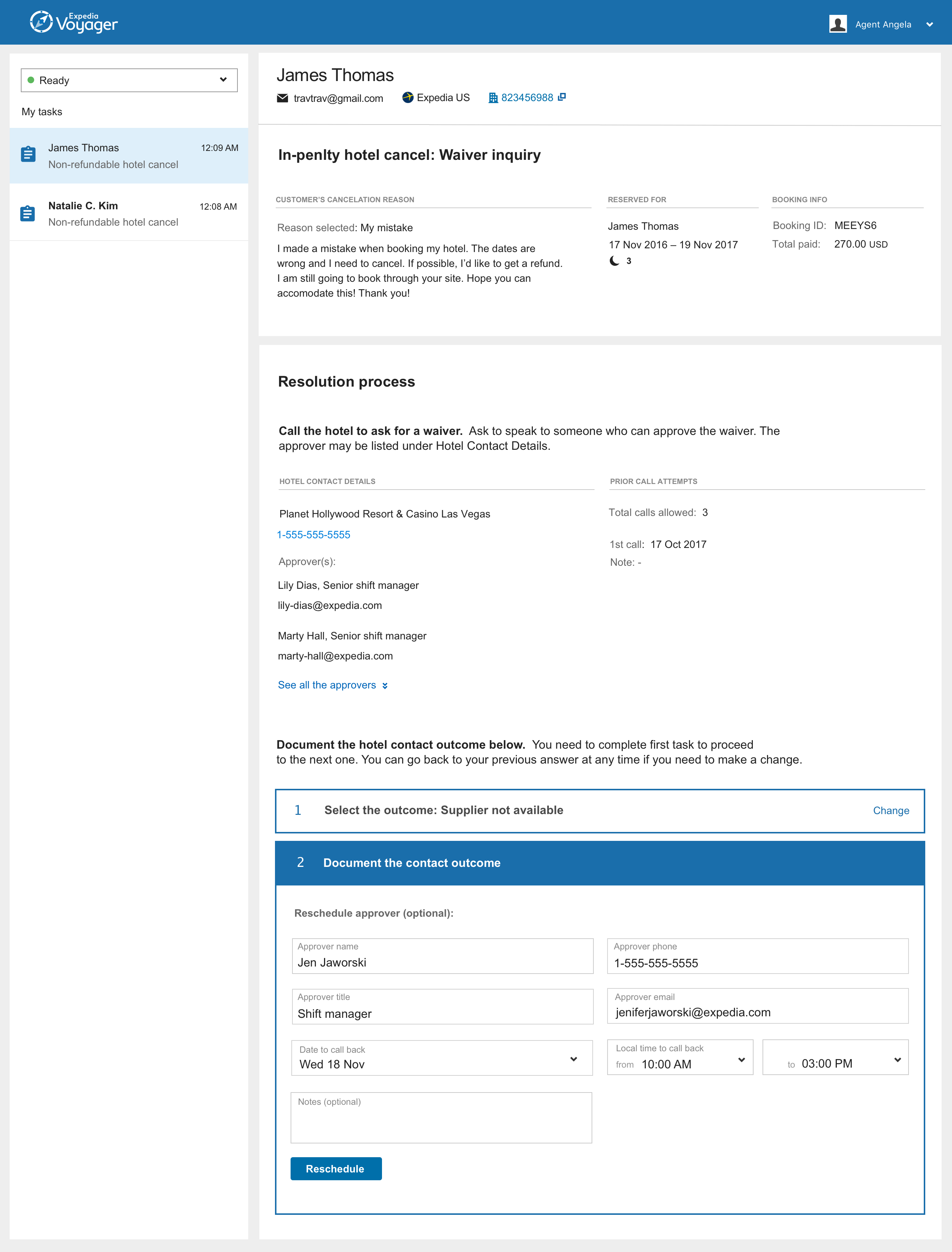
Usability study 3 - new version B (note: use of the accordions instead of the radio buttons)
Usability study 3 - new version B (note: use of the accordions instead of the radio buttons)
Usability study 3 - new version B (note: use of the accordions instead of the radio buttons)
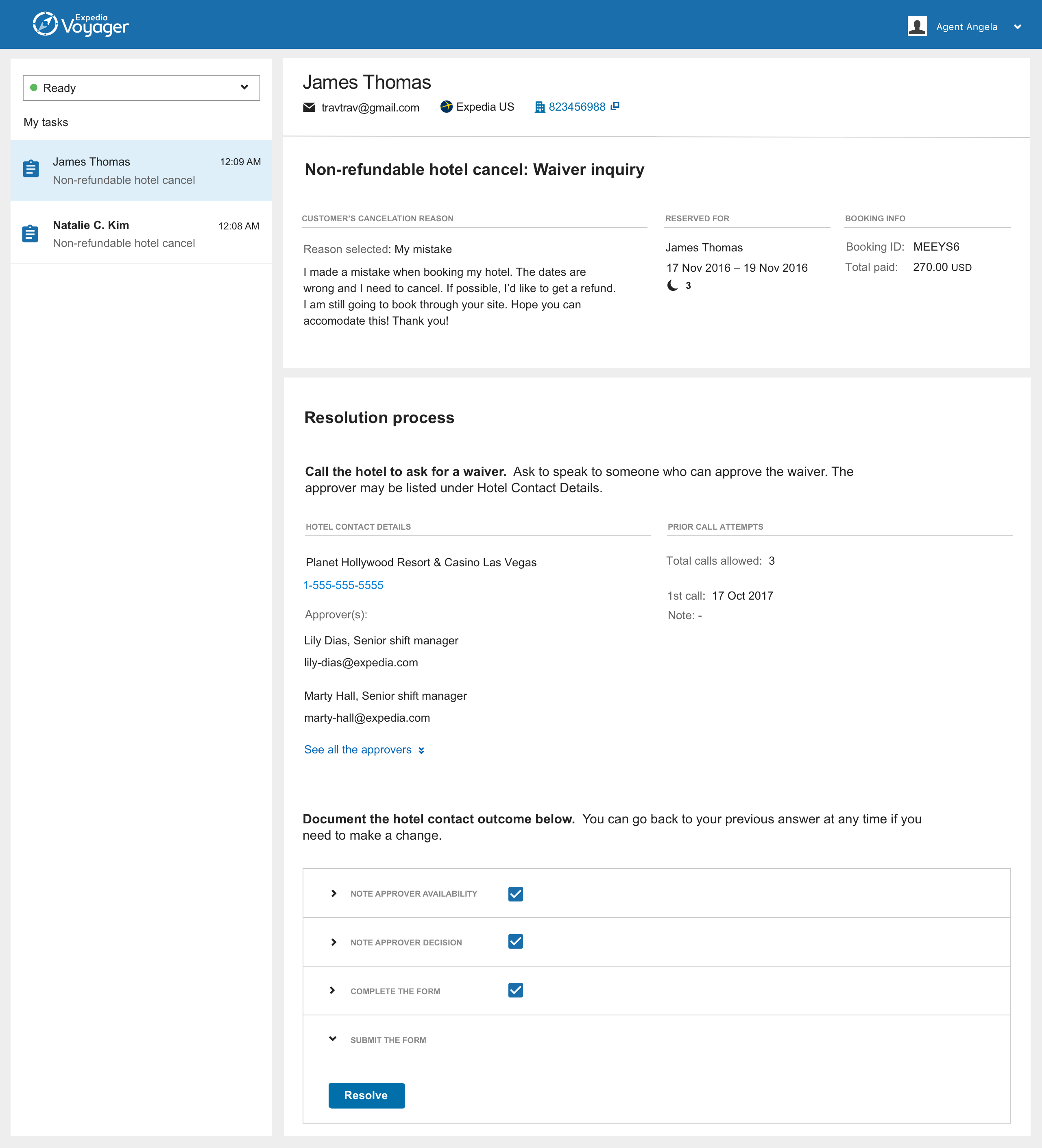
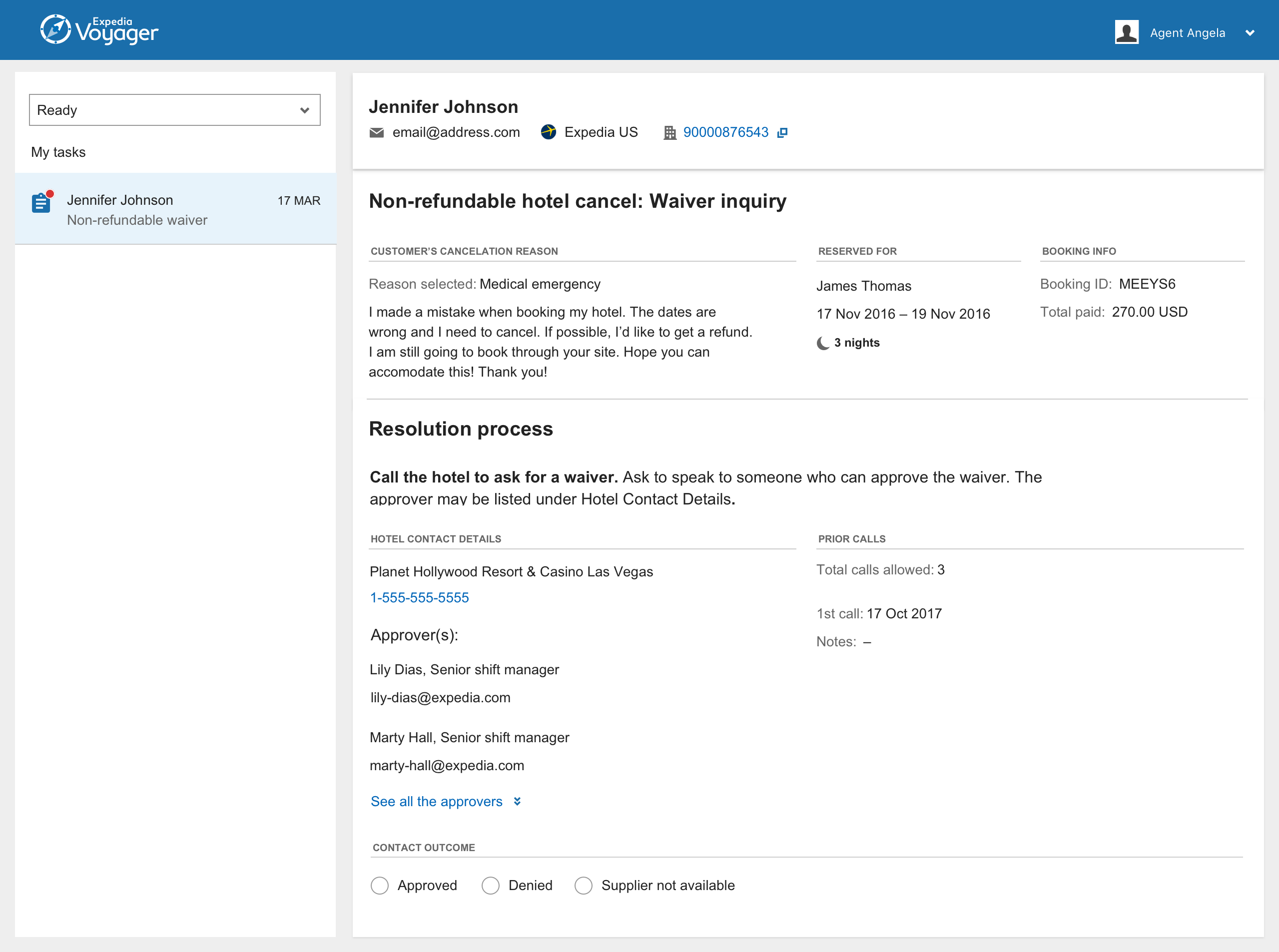
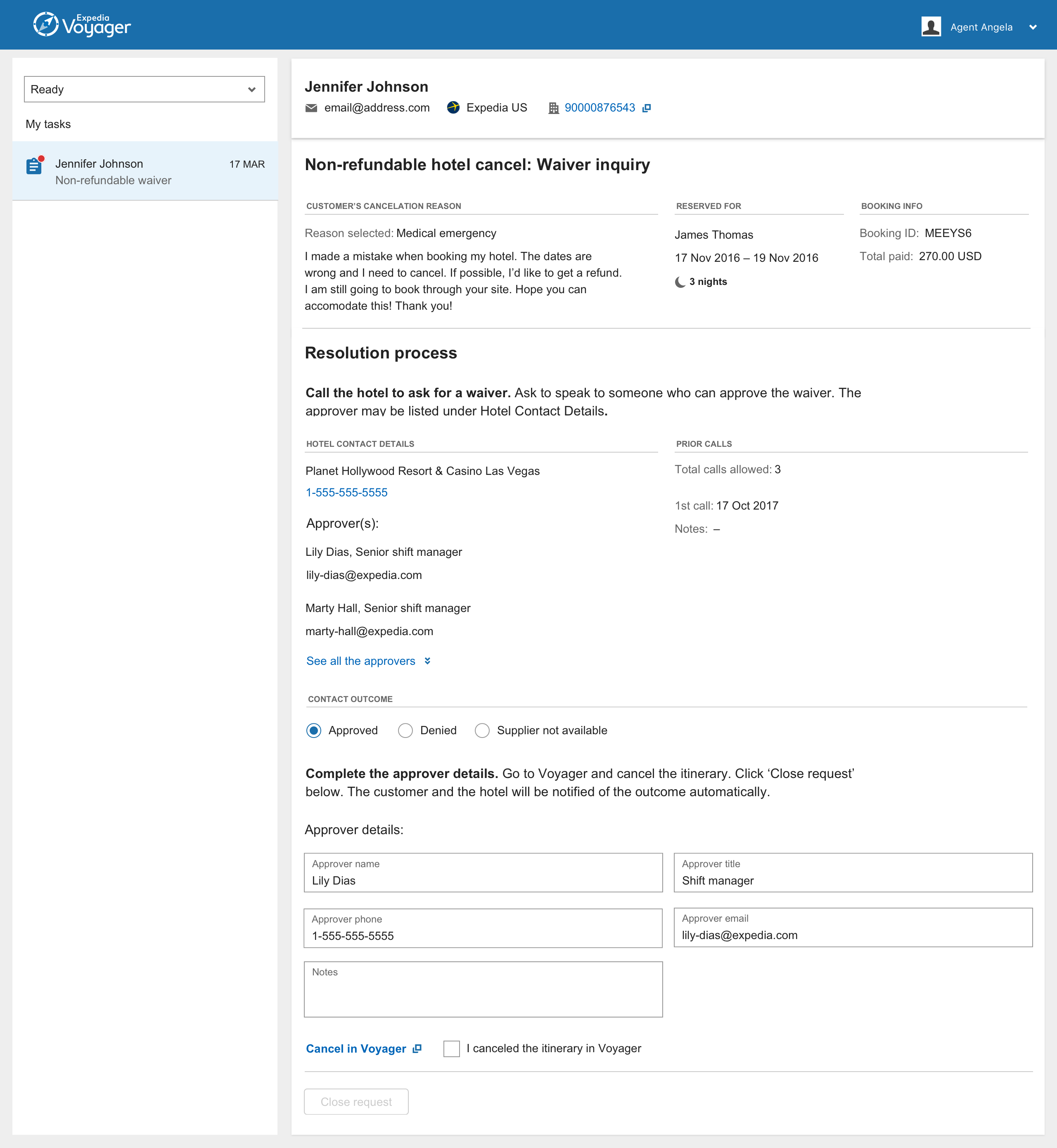
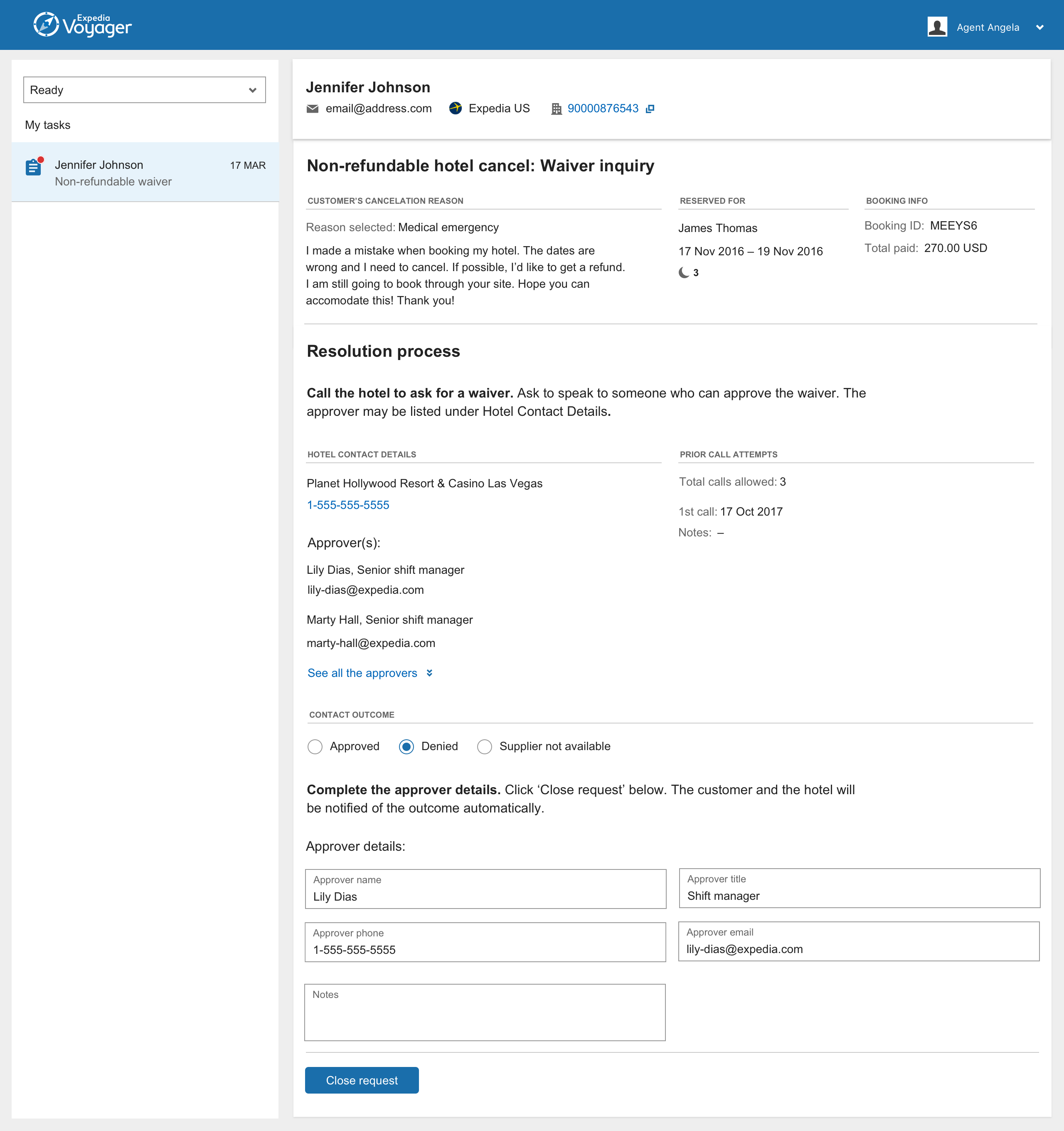
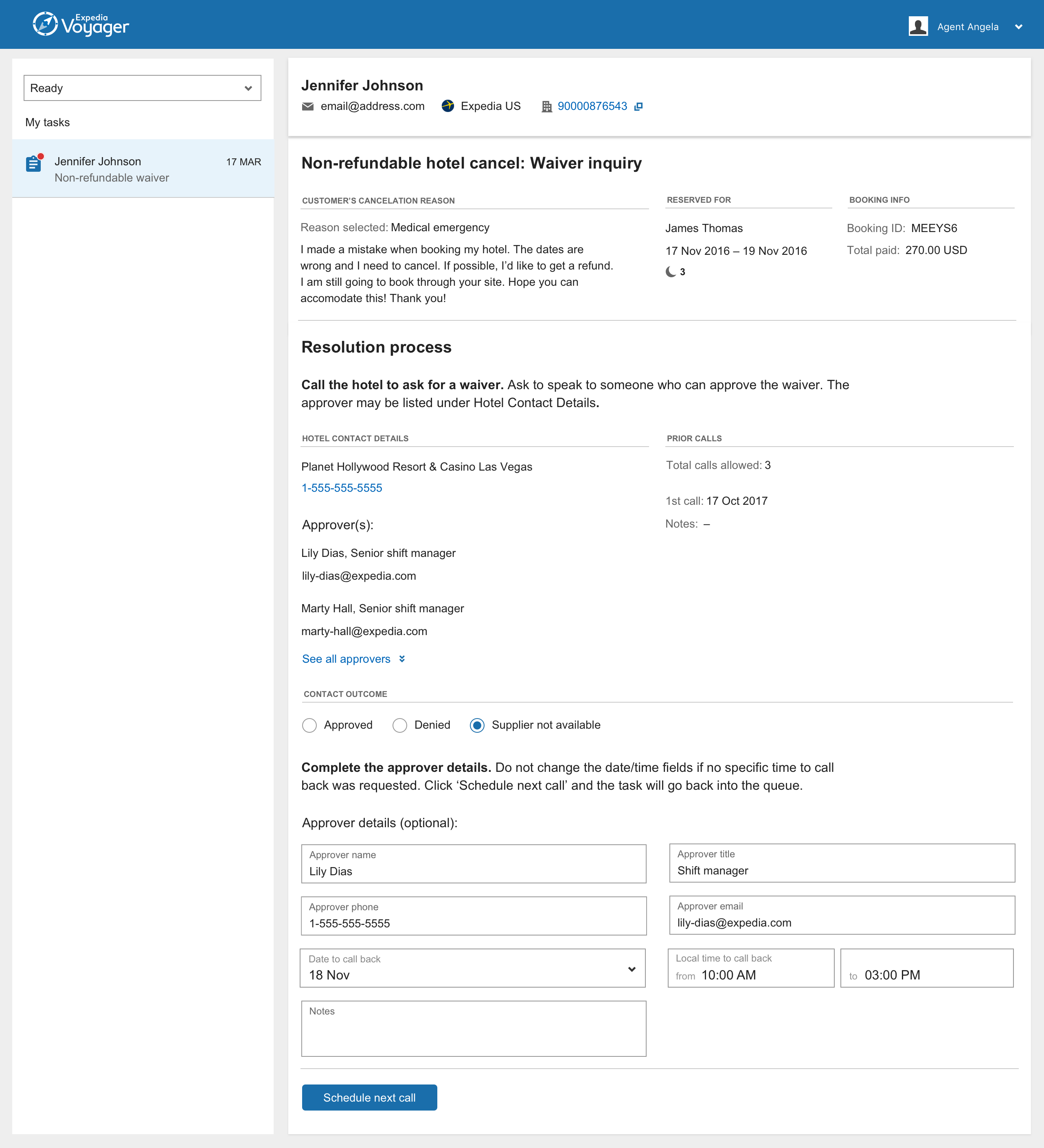
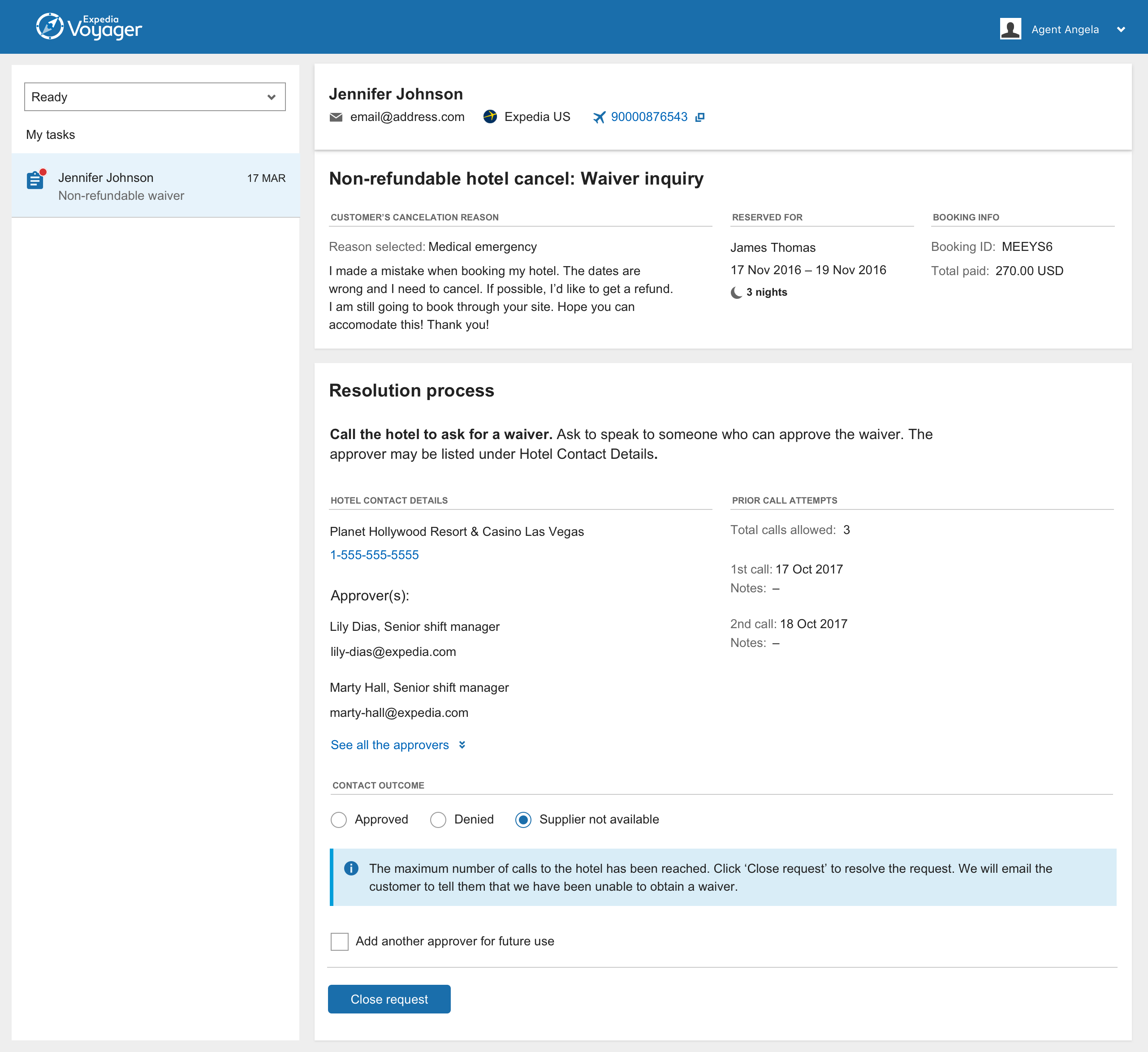
Final design
Reflections and final thoughts
Reflections and final thoughts
Reflections and final thoughts
This project demonstrates that producing designs, even without clear business requirements, helps to generate initial discussions and brainstorming within the broader team. In this case, it also helped to start collecting the requirements sooner as it exposed gaps in the initial thinking.
During the course of the project, it was clear that different stakeholders would like to see different features represented on the UI based on their teams’ needs. Thinking together as a team about what should be represented on the UI is crucial for the early brainstorming stages. And, in later stages having user research results is most effective when critiquing UI design. The main focus of my design process for this case management project was to stay user-centered - to simplify the UI and present the most important information to the agent for them to make the right next step.
I collaborated with the APAC Service Delivery (SD) team to conduct agent usability testing. In our first encounter, there was a confusion as to what is user research and how it is different from A/B live site testing. I took action to prepare a presentation to explain the main user research principles. This experience taught me to always have this presentation ready and use it to educate others in the company to advocate for the design-driven culture.
While conducting usability sessions with the APAC agents, I had to learn to balance understanding the level of the agents’ English language proficiency, the need to explain new concepts and policies, and not leading the participants while being present and engaging, all at the same time. I brought all the learnings back to the UX team at the end to help build a better picture of our agent population worldwide!
This project demonstrates that producing designs, even without clear business requirements, helps to generate initial discussions and brainstorming within the broader team. In this case, it also helped to start collecting the requirements sooner as it exposed gaps in the initial thinking.
During the course of the project, it was clear that different stakeholders would like to see different features represented on the UI based on their teams’ needs. Thinking together as a team about what should be represented on the UI is crucial for the early brainstorming stages. And, in later stages having user research results is most effective when critiquing UI design. The main focus of my design process for this case management project was to stay user-centered - to simplify the UI and present the most important information to the agent for them to make the right next step.
I collaborated with the APAC Service Delivery (SD) team to conduct agent usability testing. In our first encounter, there was a confusion as to what is user research and how it is different from A/B live site testing. I took action to prepare a presentation to explain the main user research principles. This experience taught me to always have this presentation ready and use it to educate others in the company to advocate for the design-driven culture.
While conducting usability sessions with the APAC agents, I had to learn to balance understanding the level of the agents’ English language proficiency, the need to explain new concepts and policies, and not leading the participants while being present and engaging, all at the same time. I brought all the learnings back to the UX team at the end to help build a better picture of our agent population worldwide!
This project demonstrates that producing designs, even without clear business requirements, helps to generate initial discussions and brainstorming within the broader team. In this case, it also helped to start collecting the requirements sooner as it exposed gaps in the initial thinking.
During the course of the project, it was clear that different stakeholders would like to see different features represented on the UI based on their teams’ needs. Thinking together as a team about what should be represented on the UI is crucial for the early brainstorming stages. And, in later stages having user research results is most effective when critiquing UI design. The main focus of my design process for this case management project was to stay user-centered - to simplify the UI and present the most important information to the agent for them to make the right next step.
I collaborated with the APAC Service Delivery (SD) team to conduct agent usability testing. In our first encounter, there was a confusion as to what is user research and how it is different from A/B live site testing. I took action to prepare a presentation to explain the main user research principles. This experience taught me to always have this presentation ready and use it to educate others in the company to advocate for the design-driven culture.
While conducting usability sessions with the APAC agents, I had to learn to balance understanding the level of the agents’ English language proficiency, the need to explain new concepts and policies, and not leading the participants while being present and engaging, all at the same time. I brought all the learnings back to the UX team at the end to help build a better picture of our agent population worldwide!
This project demonstrates that producing designs, even without clear business requirements, helps to generate initial discussions and brainstorming within the broader team. In this case, it also helped to start collecting the requirements sooner as it exposed gaps in the initial thinking.
During the course of the project, it was clear that different stakeholders would like to see different features represented on the UI based on their teams’ needs. Thinking together as a team about what should be represented on the UI is crucial for the early brainstorming stages. And, in later stages having user research results is most effective when critiquing UI design.
The main focus of my design process for this case management project was to stay user-centered - to simplify the UI and present the most important information to the agent for them to make the right next step.
I collaborated with the APAC Service Delivery (SD) team to conduct agent usability testing. In our first encounter, there was a confusion as to what is user research and how it is different from A/B live site testing. I took action to prepare a presentation to explain the main user research principles. This experience taught me to always have this presentation ready and use it to educate others in the company to advocate for the design-driven culture.
While conducting usability sessions with the APAC agents, I had to learn to balance understanding the level of the agents’ English language proficiency, the need to explain new concepts and policies, and not leading the participants while being present and engaging, all at the same time. I brought all the learnings back to the UX team at the end to help build a better picture of our agent population worldwide!